Tuesday, April 29, 2014

Embodying Beginner's Mind and Working Less in Flow.

You arrive at yoga class, set your mat down in your "spot", grab the props you prefer, and then you sit down and wait for class to start.   As you practice, you move through the familiarity of the postures with the same alignment, the same work, the same tools, the same breath as the last time you got on the mat, and the time before that and before that, etc.  As creatures of habit, we tend to apply this habitual tendency to our yoga practice.  We begin to rely on our tools (or habits), our egoic sense of how things "should" be.  Yoga Anatomist,  Leslie Kaminoff,  talks about how we can become attached to the tools of practice, because those tools have previously facilitated a transformation.   These are methods we have employed to bring our practice to where it is today - and as a result, we have probably seen transformation in many places such as our physical ability, our mental focus and ability to access the feeling of stillness (yoga), and we've probably even seen changes in our lives off the mat.   We are not the same now as we were when we began our practice.  Yet, we continue to employ the same tools again and again.  We can become stuck in patterning, without recognizing that our practice is a continual exploration, a continual transformation - sometimes requiring new tools, or a new perspective on our familiar tools.

Ekhart Tolle, non dualist philosopher and author of the books "The Power of Now" and "A New Earth" speaks about how we tend to move through life on autopilot, stuck in habit, stuck in thought and as a result miss out on an experience of seeing things with a sense of newness or wonder.   He speaks about this in relation to nature specifically. We often overlook nature, we recognize its beauty but rarely do we allow ourselves time to experience nature.  To fully experience the essence of a single flower, for example.   Our yoga practice can take on this same mundane quality.  We essentially move through the motions of our postures, without truly embodying them.   The simple vinyasa - plank, chaturanga, updog, downdog becomes robotic and uninspired as we are already thinking about upward dog while we are lowering into chaturanga rather than experiencing chaturanga as it is on that given day.   Often we do the postures the exact same way, every. single. time.   And we have the same "story" about the pose every single time as well.  
What if we began to embody our postures with a sense of beginner's mind?   Ekhart Tolle suggests looking at a flower without labelling it.   He isn't suggesting we forget all we know about that flower, but rather to look at it with a sense of newness.  When we close our yoga practice we end with corpse pose, death. That particular practice is over.   We shouldn't bring the karmic imprint of that practice into our next experience on the mat.  Rather, we take with us an intellectual understanding of the mechanics of our practice and leave behind what we think we "know" about yoga, and how yoga unfolds in our body.   When we return to the mat, it is like a rebirth.   Like a baby, we can experience our practice with a sense of newness.  

When we practice in this way, we are tapping into the present moment.   Tapping into stillness.   We are shifting away from the thinking mind, and the underlying narration of our practice dissolves as we begin to embody the movements.   Tolle writes about the "inner body" in his book, "The Power of Now" .  

The body that you can see and touch cannot take you into Being.  But that visible and tangible body is only an outer shell, or rather a limited and distorted perception of a deeper reality.   In your natural state of connectedness with Being, this deeper reality can be felt every moment as the invisible inner body, the animating presence within you.  So to "inhabit the body" is to feel the body from within, to feel the life inside the body and thereby come to know that you are beyond the outer form. 

Yoga practice gives us a perfect opportunity to feel the inner body.   We can practice with attention to the experience of the body, and as a result create an experience of present awareness.  When we simply move through the motions without experiencing them with our inner body - the practice is more like going to the gym and exercising.  

How do we make the connection to the inner body?  Patanjali's Yoga Sutra outlines 8 limbs of yoga  - 1. Moral Conduct 2. Observances 3. Posture 4. Control of Breath 5. Withdrawal of senses 6. Fixed concentration 7. Meditation 8. Absolute Absorption (enlightenment).   The first 3 limbs describe the external practice of yoga.  The fourth limb - Pranayama, or control of breath, is the bridge between the first three limbs and the last 3 limbs.  The breath happens externally - but it also happens internally.  The breath is our connection to the inner practice of yoga.  The breath is always happening now.  Awareness of breathing is our tool to turn our practice from mere exercise into an experience of yoga, or stillness.

When we practice with an awareness of the inner body, we can become tuned into our experience.  We can bring beginners mind to our practice and feel our experience with that sense of newness.   When we bring excess thought, narration and clutter into the mind - we are creating a disconnect with the present moment, and often a sense of discontent with the present moment as well.   We are creating extra work for ourselves.

The Taoist philosophy, Wu Wei, is about letting go of excess work in order to allow nature to flow seamlessly.   This is such an important tool in our yoga practice.   I often see students, and have been such a student myself, so attached to their "tools", they work too hard to do each pose exactly right, just as they have learned to do them.   Yet our practice should be opportunity to explore detaching from the tools.  Finding a new place to lay your mat, using different props, using props, not using props, exploring different ways of aligning your body, letting go of the inner voice and trusting an intuitive sense of movement, exploring new ways of using the breath.  Letting go of too much work and allowing nature to unfold.  Letting go of the way the "ego" wants us to practice and truly embodying the experience instead.  Flow yoga is one style that allows the practitioner to access an intuitive sense of fluid movement during practice.   I also find the yin practice to be another style that fosters a sense of keen interest in, and present moment awareness of, the inner body.

I teach my flow classes with an awareness of moving into the inner body, how to work from a deep sense of self in order to make the practice feel less like hard work.  Yes, you will sweat and you will get stronger when you come to a flow class.  But, you should also leave a flow class (and this is true of all yoga practices) feeling nourished, present, still, and relaxed.   When we work too hard, we stress our nervous system.  Some stress is good - and we need to learn how to effectively manage good stress so that we can trigger our body to remain relaxed amidst the stress.   Obviously, the ability to do this extends its usefulness to life off the mat.

When we practice, we should do only the work necessary to feel the effect of the posture,  no more.   We engage deeply within - we feel our centre with our mind, actively with our breath and sometimes with the use of our deepest core muscles or an awareness of the bandhas.   We give from and pull into that sense of centre, and then everything else relaxes.  Particularly those places we tend to grip needlessly like the face, shoulders, gluteals, low back, breath, and mind.   If we feel relaxed, we can more easily allow ourselves to embody our flow.   We can let go of habitual patterning and come to the practice again and again with the mind of a beginner.  Through this path we can continue to always experience the transformative quality of yoga.

Namaste.

Join me for flow yoga at Yoga Mala.

Mondays 9:30am
Tuesdays, Thursdays & Fridays 6:00pm
Saturdays 11am.


Friday, April 4, 2014

Flow & the physical practice of yoga.

I've been reading Michael Stone's book "The Inner Tradition of Yoga".  This paragraph sparked some interesting thoughts for me the other day as I was contemplating the experience of physical practice through the lens of masculine & feminine essence as explained by author, David Deida, who explores the yoga of sexuality in his writing.    

Stone writes,
If you look at experience, such a small percentage of it is either painful or pleasant - most is actually fairly neutral.  It's the neutral, plain, common moments of experience that we also want to tune into - stepping, lifting an arm, feeling a breath, and tilting the gaze.  It is hard to stay in neutral feeling tones, especially in such an entertainment-based culture.   Moving the body and being present in intentional movement teaches us how to receive experience on its own terms.  Otherwise, what is this practice in service of? (pg 135).
What is this practice in service of?  As a yoga instructor, I often think about the intention of my teaching.  What do I hope my students gain from coming to my classes?  My answer to this question is that ultimately, our practice is in service of svadhyaya - self study.   We come to the mat to better know ourselves.

When I roll out my mat, the familiar feeling of a downward dog, or a child's pose will always return me to my purpose in practice.   I am here to experience.  Experience the body, the breath, the mind.   This experience is always met with an openness and softness in the mind, and a keen interest in when the mind waivers or fluctuates from the receptive openness I am seeking to cultivate.   Which postures challenge me, which ones make me feel good, what is the dialogue when I feel challenged?  What is the dialogue when I'm not.  What are my stories?

Michael Stone writes that we should stay in neutral feeling tones, that our practice is a pursuit of receiving the experience as it is.  On it's own terms.  I am reminded of a line in the Bhagavid Gita when thinking about this approach to practice,
When the senses contact sense objects, a person experiences cold or heat, pleasure of pain.  These experiences are fleeting; they come and go.  Bear them patiently, Arjuna.  Those who are unaffected by these changes, who are the same in pleasure and pain, are truly wise and fit for immortality.  Assert your strength and realize this (14, Bhagavad Gita)
 We observe, and we remain unchanged by the experience.

Every time I approach my physical practice, I seek to experience.  To be constant despite the fluctuations occurring physically and in my thoughts  This is masculine essence.  To practice with this purpose is a masculine practice.   The masculine, according to Deida, is consciousness.  It is that which is "experiencing".  It is the part of you that is the witness, that listens but does not change.  The masculine sits back and watches.    We know that this is the goal of yoga according to Patanjali.   "Yogas citta vritti nirodhah".   Yoga is the stilling of the mind.

Yet, as someone who identifies more with the feminine essence, that which changes,  I know that feeling of being IN my body is what draws me to the mat.  One could argue, that it is the feminine essence that calls each of us to the physical practice.  I desire to be in my body, to move my body.  To breathe and to be fully immersed in the physical experience of yoga.   I WANT to experience the fluctuations of the body, the fluctuations in my thoughts in order to tap into the life force - that which is feminine.   According to Deida, femininity is everything that changes, it is nature.  The feminine dances.  

The flow between the changing experience of the practice and the unchanging witness to the practice is what makes physical yoga a valuable experience.   When I begin to flow through postures, I become deeply immersed in the experience of life. The balance between masculinity and femininity, between effort and ease, between movement & stillness.  We are playing with the essence of the human experience - we are experiencing life & death, everything and nothing.  And as we move, we observe and we reflect and we remain open to what the experience is revealing to us - self study.   The intention of of our physical practice should be to fully immerse in this experience - to feel the fluctuations that arise and to tap into the stillness that exists - recognizing that amidst the changing, the self doubt, the pride, and the pain,  there is a part of us that is unchanged.   Neutrality within the experience of  physical practice isn't all we should strive for.  We ought to experience the dance.  Flow.   Feel.   Be.

Namaste.


Sunday, January 26, 2014

Thrown Out of the Nest


Last week, I was at the studio helping with adjustments in the Mysore room.  Actually, I'm not sure I would say I was "helping" so much as "absorbing".   Absorbing like a porous open sponge.   There was a moment, as I learned different alignment rules, new ways of moving bodies, and how to support deep openings in the students that I felt overwhelmed.   I thought, "I feel like I've been thrown out of the nest".  It was a moment of realization, not that I needed to abandon all I had learned, but that I needed to be open to learning more.  That if I attached to the idea that I knew all there was to know already, I couldn't approach this new  information with openness and willingness.  Having a comfortable base level of knowledge and sense of pride in my teaching ability, I was required to be humble and not attached to what I "know" as I accepted the new information being offered.

Practice is the same.  We can get awfully comfortable with a practice that feels good, that doesn't challenge us to move into spaces that bring up discomfort or feelings of being weak, inexperienced or not knowledgeable about our practice.   In our comfort, we begin to feel ease and at times pride in our practice. When we get on the mat, even in a class setting, we work with the things that make us feel good and back away from the things that challenge us.   The nest is very comfortable, predictable and safe.

Each time we come to the mat, we need to approach our practice with "beginner's mind".  Cultivating a sense of newness and freshness with each breath.  We need to be willing to come to the practice as a bird being thrown out of the nest.   Today's practice won't be yesterday's practice or tomorrow's.  If we think of our progression as linear, we will begin to cultivate patterns of movement and thought that will pull us back into the comfort zone.  Our teachers, like a bird's mother,  are supporting our practice, encouraging growth and insisting we move into the spaces we may feel uncomfortable moving into.    Listening to their guidance, and trusting them will create a new safe space to begin to explore our practice more deeply.

Deepening a posture does not mean making it harder, or even expressing a more complex variation on a posture.  It means having a more cohesive approach to the concept of equanimity on the mat.   We feel less effort as we open ourselves up to discomfort and let the breath carry us through the posture.

Finally, as we end our practice we take rest.  We find stillness in savasana, allowing our bodymind to integrate the practice.   When we practice savasana, corpse pose, we die.   We've practiced and cultivated new patterns, and moved into some new spaces and then we detach.  Our body has memory of practice, but the ego mind lets go.   When we return to the mat, we return reborn and open to what will come.  Our body will flow with a sense of familiarity but our mind needs to feel fresh and new like this is the first time we've ever come to the mat.   This is the practice.

"Abhyasa-vaiagryabhyam tan- nirodahah"

Continuous endeavor and non-attachment are both required to constrain mentality.  Patanjali Yoga Sutras Samadhi-pada (12)


Monday, January 20, 2014

Community Center Yoga, 30 Day Yoga Challenge, Open House

Tomorrow night we kick off another session of yoga in the Argyle Park Community center.  The vinyasa flow class starts at 8pm January 21,2014.  We run for a total of 10 weeks and the cost is $50 plus your community membership.  This is an introductory class but it would be great if you had some previous yoga experience prior to joining.  The class is open to anyone, provided you have a community membership for the community you reside in.  You may register tomorrow night if you have not already.  The community center is located next to Dr. Hanna school in Argyle Park, north Regina.

The Level 1 and Continuing classes will begin on February 3rd.  Level 1 is an introduction to yoga and is good for anyone interested in checking out a yoga practice.  This class starts at 6:30pm and is $60 for a 10 week session.   Continuing students (anyone who has completed level 1 and is looking to deepen their practice a bit) can join the 8pm class.  Same cost.  You may also sign up for these on the 3rd, perhaps considering arriving about 15 minutes early to give yourself time to register.  

Community Center yoga is a great way to practice.  The costs are reasonable and the students are always supportive, kind and generous in their sharing of practice.  I look forward to teaching the Argyle Park students every week - we've got some dedicated yogis up here in the North End!

If you are thinking about a studio practice, come down to Yoga Mala on Saturday for the Open House.  There will be 2 free classes on that day (Astanga Basics and Sattva Basics, see online scheduler for time and to register), and an opportunity to tour the studio and meet all the great people who work there.   The open house is come and go between 9am and 12pm, and there is a great sale on new student 1 month passes.  Regularly $40, the passes will be $35 on Saturday.  An unlimited pass is a great way to dive head first into yoga.  It'll give you an opportunity to explore all the different styles of yoga, and you will begin to discover just how life changing a dedicated practice can be.

And, if you are feeling really bold, why not join me in Yoga Mala's 30 Day Challenge.   30 in studio practice in 30 days ( you can double up if you miss a day).  This will transform your practice, only good things can happen if you dedicate yourself to your practice in this way.   Day 1 was today, so it's not too late to join!  I will be posting photos daily on my instagram account @suryayogaregina featuring a posture from the practice I did that day.  Follow me on Instagram, and post your #30days30practices photos with me!  I'd love to see your growth over the course of the month.

The time is now!  The Regina Yoga community is getting stronger, bolder, and more diverse than ever.  Exciting stuff!

Namaste!

Wednesday, January 15, 2014

Desk job? Here's some help for you.

This morning I had the pleasure of joining Heather Anderson on Global Morning News for a new yoga series.  We have planned for 4 interviews, spaced 2 weeks apart.  Today's segment was about how to prevent back pain for those who work in desk jobs.

Before embarking on any preventative therapy, please consult your doctor, especially if you are experiencing any back pain.


Sitting Down

Notice how you sit down.  Most often, we sit down with a tucked pelvis, curving the tailbone under us resulting in flexion through the low back.  Sitting this way encourages poor posture habits, puts strain on the low back and will create shortened hamstring muscles.

Instead - try the Gokhale method of "stack sitting".


Hip Opener - Seated Pigeon

Desk jobs can create tightness in the hips, which, over time can contribute to back pain.   One of my favorite hip stretches is a seated pigeon.   This can be done sitting in any chair.  First, sit down using the stack sitting method, then scoot forward to the edge of the chair.  Cross one ankle over the knee with the supporting foot grounding firmly on the floor.  Lift your tailbone to find a stretch, or begin to fold forward in order to find a greater stretch.  Hold for 5/10 breaths and move to the other side.

video of seated pigeon - yoga glo

Cat/Cow

We often practice cat/cow in class.  This is a great way to feel movement in the hips and along the spine.  It is also a great core strength exercise if you are maintaining core awareness throughout the movement.


Salabhasana - Locust Pose

The last posture we talked about was, salabhasana or locust pose.  Some people refer to this pose as "Superman".   This posture is a supine back bend, so it is nice to warm up with some shoulder stretching and lunges first.   For this pose, you would move to your belly and then engaging the muscles along the spine lift your head and chest away from the floor with the shoulders relaxing down the back.  Feel length in the back of your neck gazing down at a spot on the floor just forward of your mat.   If you are feeling good here, you can opt to lift the hands away from the floor.  I prefer to have my palms facing down allowing some strength to move into the triceps.   From here you may also lift your feet away from the floor watching not to over engage your glutes.   Pressing your pubic bone into the floor, and rolling the thighs in will create space in the low back and keep the glutes soft.   Lifting your belly away from the floor will engage abdominals and protect the spine.


If you have a desk job, it is important to make sure that you are aware of how your job is affecting your posture.  Take movement breaks as often as you are able - visit Yoga Mala on your lunch break or check to see if your office offers noon hour yoga classes.   You can also check into alternatives to the traditional seated desk such as a standing desk or a treadmill desk.   

My next visit to Global Morning news will be in two weeks (January 29th) when we will talk about downtime, relaxing and meditation.   

Some yoga classes you could try: 

Yin (Emma)
Yoga Mala 
Fridays 12:05pm

Basics (me)
Yoga Mala
Saturdays 2:00pm

Flow (Johanna)
Yoga Mala
Wednesdays 9:30am 

Come to Yoga Mala's open house on Saturday January 20th!  There are two free classes running on that day, and new student one month unlimited passes will be on sale for $35.  A great way to start a yoga practice or check out my new home studio.   I will be there that day to show you around.   

Namaste.  


Wednesday, January 8, 2014

Change


The first day of 2014 was also a new moon.  The new moon signifies new beginnings.  As I was bringing 2013 to a close, I was met with a big decision.    The new year was marking the 2 year anniversary of teaching at the studio in which I trained.  Unbelievably, it was also marking the 3 year anniversary of the start of my 16 month immersive teacher training at Bodhi Tree.    

But, as I drew close to these anniversaries there was a decision to be made - one that I had been playing around with for a few months in my head.   I had a very comfortable teaching practice at Bodhi, and felt blessed in sharing in it's wonderful student community.  I looked forward to work every day, and loved seeing the growth of my many loyal and dedicated students.   I also felt like it was time to move along, to meander along my path with a little less comfort - perhaps taking a chance at something new.   

Over the first two years of teaching, I tried very had to dive into learning as much as I could about teaching and conveying the essence of yoga to my students.   I wanted to facilitate them in finding a connection to their breath, themselves and their bodies.    As happens to many teachers, this process found me practising more and more with the intent of planning classes and less and less with the intent of furthering my own practice as a student.   I attended Intermediate classes whenever I could, but often fell short on my day to day fundamentals practice.  I tried to work on this at home, but still found I needed the eye of an experienced teacher to look at my body and teach me.   

When I went to Wanderlust, I felt ignited in my practice as I flowed with classrooms full of peers whose practice held me up and supported me as I touched upon many edges and humbling limitations in my body.   It was a call to return to the mat again.   Upon my return, my teaching ignited but I didn't head back into the classroom setting again for a couple of months.  

Inspired by how the Sattva practice felt in my body at Wanderlust, I ventured into Yoga Mala one day to chat to the studio owner Emma, who encouraged me to come practice.  I was in class the next day for an astanga elements class that brought me right to my edge.  I continued practising at Yoga Mala, finding my groove in the Sattva, flow and yin programs.  I kept going to astanga elements classes - loving how it was making me feel strong, grounded, and challenged by my practice in more than just a physical sense even though I still hold a strong mental resistance to the discipline of the astanga lineage.   (Sometimes what we resist, we need most!) 

Emma planted the seed that she was growing her flow program, and invited me to join her studio as a flow teacher.   In discussing flow with Emma we recognized we were on the same page when describing how flow fits into the yoga paradigm.   I spoke about how I focus on the space between poses, movement with breath and how I want students to feel fluidity, grace and strength in their body as they mindfully move through transitions and postures.  It seemed like a great match for my growth as a flow teacher.  

I finally made the difficult decision to embark on 2014 with a big change, a big opportunity for growth and a determined dedication to commit to my own practice as a yoga student.   I'm beginning to rediscover my love for being on the mat as a student.   I've become keenly aware of my own practice, and as teachers we know that we must first and foremost be students of yoga.   

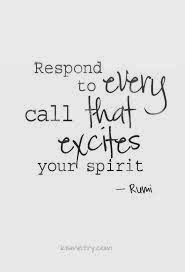
I'm looking forward to growing with the Yoga Mala community - something that truly does excite my spirit.   Of course, I will miss my Bodhi teachers, colleagues and students, but I know I will see them around the community and hopefully as a familiar face in a class once in a while.  The yoga community in Regina is just beginning to flourish and take hold, I'm so excited to be part of this growing vibrant movement in the Queen City.  I'm so grateful for every part of this journey so far, I can hardly wait to see what the future holds going forward.   '

One breath at a time.  

Here is my January schedule at Yoga Mala for those interested in stopping by for a class.   Take advantage of the $40 new student rate, unlimited yoga for one month for new students.  I found this pass to be a great way to kick start a dedicated practice plus check out the wide range of yoga programs offered at the studio. 

Mondays 9:30am Flow
Saturdays 2:00pm Basics  

Others for the month of January:
Friday January 10 6:00 Flow
Saturday January 11 3:30 Flow
Sunday January 12 3:00 Flow
Friday January 17 6:00 Flow
Friday January 24 6:00 Flow 

If you would like to receive my newsletter regarding future classes, schedules, upcoming workshops and other random interesting news, please click the link in the side bar to sign up.   

Namaste


Friday, December 27, 2013

Finding Balance

“Your hand opens and closes, opens and closes. If it were always a fist or always stretched open, you would be paralysed. Your deepest presence is in every small contracting and expanding, the two as beautifully balanced and coordinated as birds' wings.”  - Rumi 

Think of one word that describes 2013 for you.  Just one word.   Now, think of one word that you would like to manifest in 2014.   I've asked my students to think of these words over the past couple of weeks as they sit quietly before our asana practice.   The word for what they would like to manifest for themselves in 2014 then became the intention for their practice.  How can you find this intention as you move from posture to posture? As a result, turning intention into action on the mat.    

For me, 2013 was "stabilization".  This year was about reuniting my family after a year of separation from my spouse, it was about settling into a teaching career and a method of teaching that resonates and feels unique to me, it was about finding my grounding and working to create stability for myself and my family.  The year certainly had it's ups and downs, and moments where stability was challenged.  At the end of the year, I can say that I feel like I have a solid foundation, a solid ground to build from.

I teach balance often in class.  We talk about the essential elements of staying balanced while in our postures.  We look for grounding, dristi (focused soft mindful gaze), and stability or awareness of our core.   From these elements we begin to find balance.

2013 was the year of creating the elements of a balanced life.   2014 will be about maintaining that balance and becoming aware of how to sustain balance personally, and with my work/family life.

We've all had practices where we've felt out of balance.  Both spiritually and physically as we topple our usually strong and sturdy vrksasana.   I expect that when our body falls out of balance often during practice we can easily link that to something that has been out of balance in our lives, perhaps related to diet, or even emotions or activity level.    Mind and body are one, not separate entities.  So - imbalance elsewhere in the mind or body often shows up as a wobble in our practice.   This can work both ways - if we see imbalance in our practice we can begin to work through it and challenge ourselves to find balance on the mat and as a result perhaps begin to see more balance in other areas of our lives.

"shtira sukham asanam"
"postures assumed should be both still and pleasant"
- Yoga Sutra, Sadhana-pada (46)

Our practice in January will be about finding balance.  Following a month of strength based practice, we will begin to use the grounding and centering we cultivated to begin expressing our postures with a balance between strength & ease, stillness & sweetness.   The balancing postures allow us to explore this concept fully as we attempt to stay grounded amid varying challenges.  

Because, life is like that.   We've probably all felt ourselves in the experience of a life out of balance.  When I began teaching, I wanted to teach a lot so I took any and all teaching opportunities that came my way.  I ended up with a crazy schedule that had me heading in all directions like (to quote Sadie Nardini) "an octopus on rollerskates".   In an attempt to do what I loved to do, I ended up creating imbalance in other areas of my life.  

This winter I have begun to prioritize more, finding more time with family by adjusting my schedule and saying "no" when I needed to.   I have also dedicated myself to a regular studio based practice with teachers that inspire and challenge me.   Keeping balance by maintaining a dedicated yoga practice but also recognizing that there had to be a solid work/family balance.  I wanted to live in a way that I didn't feel the need for a vacation just so I could spend time relaxing or with my family & friends.  I wanted to find that balance in every single day.   

I've also stopped using the word "busy".   I used to always respond to the question "How are things?" with "busy".   Instead, I take the time to think about how things actually are.  If things feel busy, I see that as a sign of an imbalanced life.  "I'm just too busy to do the things I want to do...".  I'm not.  Nobody is.   It is about prioritizing, and saying no when you need to in order to cultivate the balance that allows you to feel like you are no longer too busy to live the life you want.   Furthermore; we should never be too busy to get ourselves on to the mat to do the work of physically cultivating balance in our body and thus in our lives.   

We will start by exploring the strength foundation we built last month, and then look to the elements of sthira and sukham in our postures in order to draw in and express.  To be less like an octopus on rollerskates and more like a neatly folded pile of laundry.

Our practice will begin on January 1 at Bodhi Tree Downtown for a FREE New Years practice at 3pm with Scott Maclean, Dev Kashyap and myself.   We will continue exploring balance on January 4 as we move to our hands in the Defying Gravity arm balancing and inversion workshop.  You can register for that workshop online at http://bodhitreehotyoga.com or by clicking the Defying Gravity poster in the side bar.  Use the code: "gravity" (no quotations) to get $5 off your registration if you register before January 2.

Looking forward to an exciting, fun, and balanced month (months, years...) of yoga with you!   Happy New Year! Let's do this thing!